Imagine a world where your floors sparkle without you lifting a finger. That’s the promise of the Robot Vacuum, a truly revolutionary device that has transformed household cleaning from a chore into a seamless, automated experience. These compact, intelligent cleaners have quickly become an indispensable part of modern homes, offering not just convenience but also a deeper, more consistent level of cleanliness. If you’ve been contemplating whether a robot vacuum is the right addition to your life, or simply want to understand the incredible technology behind these little marvels, you’re in the perfect place.
The Journey of Innovation: A Brief History of the Robot Vacuum
The concept of an automated floor cleaner isn’t as new as you might think. The seeds were sown as early as 1956, with Donald G. Moore patenting a “robot floor cleaner” that envisioned an autonomous device following a pre-programmed path. However, it wasn’t until 1996 that the world saw its first commercial robot vacuum: the Electrolux Trilobite. While groundbreaking, the Trilobite had its limitations, often struggling with navigation and leaving untouched areas.
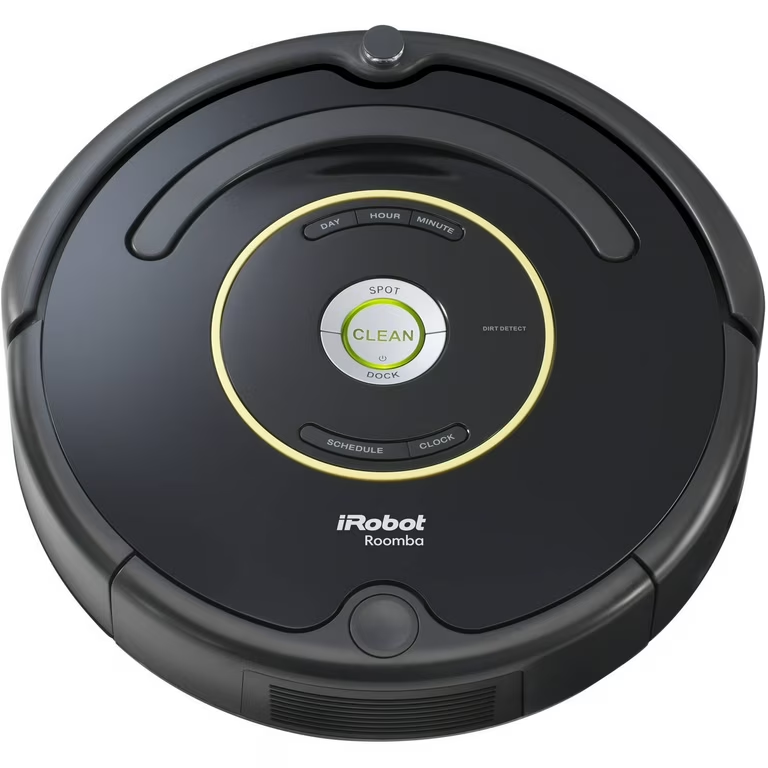
The real game-changer arrived in 2002 when iRobot introduced the Roomba. This iconic robot vacuum brought advanced sensors and software, offering more careful navigation, spot-cleaning functions, and the ability to automatically return to its charging station. The Roomba quickly made robot vacuums a mainstream aspiration. Fast forward to today, and these devices have evolved leaps and bounds, integrating sophisticated technologies like LiDAR, VSLAM, and advanced artificial intelligence to deliver unparalleled cleaning performance.
Beyond the Basics: Types and Technologies Driving the Robot Vacuum Revolution
Modern robot vacuums are far from their rudimentary ancestors. They are packed with cutting-edge technology that makes them incredibly efficient and adaptable.
Intelligent Navigation and Obstacle Avoidance
At the heart of every effective robot vacuum is its navigation system. Early models often relied on a “bump and go” approach, changing direction upon collision. Today’s robots are much smarter:
- LiDAR (Light Detection and Ranging): Many premium robot vacuums use LiDAR, which emits laser beams to scan and create precise maps of your home. This allows for highly efficient, systematic cleaning paths and helps the robot locate itself accurately.
- VSLAM (Visual Simultaneous Localization and Mapping): Camera-based systems utilize VSLAM to process images and build visual maps of your surroundings. While effective, some camera-based systems may struggle in dimly lit environments.
- 3D ToF (Time-of-Flight) and Infrared/Ultrasonic Sensors: These sensors help the robot detect and avoid obstacles with greater precision, preventing collisions and getting stuck. They can even recognize specific objects like pet waste or power cords.
“The advancements in LiDAR and VSLAM technologies have moved robot vacuums from simple bumper bots to sophisticated mapping devices that truly understand your home’s layout, making cleaning more precise and efficient than ever before,” explains Mr. Alex Chen, a Robotics Engineer. This intelligent mapping allows for features like virtual boundaries, no-go zones, and targeted room cleaning, all controlled conveniently from your smartphone.
Powerful Cleaning Capabilities
A robot vacuum isn’t just about smart navigation; it’s about powerful cleaning.
- Suction Power: Measured in Pascals (Pa), suction power is crucial. While 2000-4000 Pa is sufficient for most daily dust and debris on hard floors, pet owners or homes with thick carpets should look for models with 4000 Pa or more. High-end robot vacuums now boast impressive suction ratings upwards of 8,000 Pa, with some reaching over 20,000 Pa, allowing for deep carpet cleaning.
- Brush Systems: The design of the main brush and side brushes is key. Many robot vacuums feature specialized brushes for tackling pet hair, preventing tangles, and sweeping dirt from edges and corners.
- Mopping Functionality: A significant evolution has been the integration of mopping. Hybrid robot vacuum models can vacuum and mop simultaneously. Advanced mopping features include vibrating or pressurized mop pads for scrubbing, spinning pads for deep cleaning, electronic water flow control, and even auto-lift mechanisms that raise the mop when carpets are detected, preventing wet rugs.
Automated Convenience: Beyond Just Cleaning
The latest robot vacuum models offer features that minimize your interaction and maximize convenience:
- Self-Emptying Docks: These docks automatically empty the robot’s dustbin into a larger, sealed bag or container, allowing for weeks or even months of hands-free operation. Some even include HEPA filtration to trap fine dust and allergens.
- Self-Cleaning and Refilling Stations: For hybrid models, docking stations can wash and dry the mop pads, and even refill the robot’s water tank, making the mopping function truly autonomous.
- Auto-Charging and Resume: Almost all robot vacuums automatically return to their charging base when the battery is low and resume cleaning from where they left off once recharged.
Your Perfect Match: A Comprehensive Guide to Choosing a Robot Vacuum
With so many options, selecting the right robot vacuum can feel daunting. Here’s how to make an informed decision:
1. Assess Your Home Environment
- Floor Types: Do you have mostly hard floors (wood, tile, laminate) or carpets? For mixed flooring, a hybrid robot vacuum with intelligent mop-lifting is ideal. For plush carpets, prioritize high suction power.
- Home Size and Layout: For larger homes, a longer battery life (150+ minutes) and efficient mapping technology (LiDAR, VSLAM) are crucial. For multi-story homes, consider dedicated robots for each floor or one that can save multiple maps.
- Pets: If you have furry friends, look for robot vacuums with strong suction (4000 Pa+), specialized tangle-free brushes for pet hair, and larger dustbins or self-emptying docks.
- Allergies: Models with HEPA filters and robust sealed dustbins can significantly improve air quality by trapping allergens.
2. Prioritize Key Features
- Navigation & Mapping: Opt for LiDAR or VSLAM for intelligent, systematic cleaning. Features like virtual walls and no-go zones are invaluable for customization.
- Suction Power: Match the Pa rating to your cleaning needs and floor types.
- Mopping Capability: If you want wet cleaning, look for advanced mopping systems beyond a simple wet cloth.
- Battery Life: Ensure it’s sufficient for your home’s size to avoid multiple recharge cycles during a single cleaning session.
- Dustbin Capacity & Self-Emptying: A larger dustbin means less frequent emptying. A self-emptying dock offers ultimate convenience.
- Noise Level: While generally quieter than traditional vacuums, some models can still be noisy, especially at maximum suction.
- App Control: A good companion app allows for scheduling, map customization, and remote control.
3. Avoid Common Pitfalls
Don’t just focus on the lowest price or the highest suction number. A cheap robot vacuum with poor navigation might be more frustrating than helpful. Similarly, extreme suction isn’t necessary for every home. Instead, balance features with your specific needs and budget.
Keeping Your Robot Vacuum Running Smoothly: Maximizing Performance and Troubleshooting
A robot vacuum is an investment, and like any appliance, it benefits from proper care.
Tips for Optimal Performance
- Declutter Before You Clean: While modern robot vacuums are good at obstacle avoidance, clear wires, small toys, and loose items from the floor to prevent them from getting stuck or tangled.
- Regular Maintenance: Empty the dustbin after every few runs (or regularly check your self-empty station). Clean brushes, filters, and sensors frequently. Dirty filters reduce suction, and dirty sensors hinder navigation.
- Software Updates: Keep your robot vacuum’s firmware updated. Manufacturers often release updates that improve navigation, efficiency, and add new features.
- Strategic Dock Placement: Place the charging dock against a wall in an open area, ensuring enough space on either side and in front of it for the robot to navigate easily.
Common Troubleshooting
- Getting Stuck: Ensure clear pathways. Use virtual no-go zones in problem areas like tangled cords or high-pile rugs it can’t climb.
- Poor Cleaning: Check if the dustbin is full, brushes are tangled, or filters are clogged. Recalibrate the map if navigation seems off.
- Failure to Charge: Clean the charging contacts on both the robot and the dock. Ensure the dock is properly plugged in.
The Transformative Benefits of a Robot Vacuum in Modern Life
“As Dr. Evelyn Reed, a leading Smart Home Technology Analyst, often points out, ‘The true magic of a robot vacuum isn’t just its ability to clean, but how it frees up your most valuable resource: your time. It’s an investment in a cleaner home and a more relaxed lifestyle.'”
Owning a robot vacuum brings a wealth of advantages:
- Time-Saving & Convenience: The most obvious benefit is reclaiming your time. Schedule it to clean while you’re at work, sleeping, or enjoying family time.
- Consistent Cleanliness: Daily automated cleaning prevents dust, dirt, and pet hair from building up, maintaining a consistently tidier home.
- Reaches Hidden Spots: Its low profile allows it to effortlessly clean under furniture like beds and couches, areas often missed by traditional vacuums.
- Improved Air Quality: With regular cleaning and good filtration systems, robot vacuums can reduce allergens and dust particles circulating in your home.
- Smart Home Integration: These devices fit seamlessly into your connected home ecosystem.
Seamless Integration with Your Smart Home Ecosystem
One of the most exciting aspects of modern robot vacuums is their ability to integrate effortlessly into your smart home.
- Voice Control: Connect your robot vacuum to smart assistants like Amazon Alexa or Google Assistant. You can then simply use voice commands: “Alexa, tell the robot vacuum to start cleaning,” or “Hey Google, clean the kitchen.”
- Smartphone Apps: Most robot vacuums come with intuitive apps that allow you to schedule cleaning, view cleaning maps, set virtual boundaries, adjust suction power, and monitor maintenance alerts from anywhere.
- IoT Connectivity: Utilizing Wi-Fi and sometimes Bluetooth, robot vacuums become part of your Internet of Things (IoT) network. With emerging standards like Matter, integration across different smart home platforms is becoming even more streamlined. This allows for automated routines, such as your robot vacuum starting a clean when you leave the house, triggered by a smart door sensor.
Frequently Asked Questions About Robot Vacuums
Q: Can a robot vacuum replace a traditional upright vacuum completely?
A: While a robot vacuum is excellent for daily maintenance and keeping floors consistently clean, it generally doesn’t replace the need for a traditional vacuum for deep cleaning, especially on thick carpets, or for tackling large spills and above-floor cleaning. Think of it as a powerful complementary tool.
Q: How do robot vacuums avoid stairs?
A: Robot vacuums are equipped with “cliff sensors” that detect drops, preventing them from falling down stairs or off ledges. This is a standard safety feature even on basic models.
Q: Are robot vacuums good for pet hair?
A: Many robot vacuums are specifically designed with pet owners in mind. Look for models with strong suction power (4000 Pa or more), specialized anti-tangle brushes, and large dustbins or self-emptying docks to manage pet hair effectively.
Q: How often should I run my robot vacuum?
A: For optimal cleanliness, running your robot vacuum daily is recommended, especially in high-traffic areas or homes with pets. Many users schedule it to run once a day, or even multiple times for specific zones, while they are out of the house.
Q: What is the average lifespan of a robot vacuum?
A: The lifespan of a robot vacuum typically ranges from 3 to 5 years, though this can vary depending on usage, maintenance, and brand quality. Regular cleaning and timely replacement of wear-and-tear parts like brushes and filters can extend its life.
Q: Can robot vacuums map multiple floors?
A: Yes, many advanced robot vacuums can save multiple floor maps, allowing you to easily move them between levels and still benefit from smart navigation and customized cleaning zones for each floor.
Your Cleaner Home Awaits
The robot vacuum has truly redefined home cleaning, offering an unparalleled blend of convenience, efficiency, and smart technology. From their humble beginnings to today’s AI-powered marvels, these devices are more than just gadgets; they are tireless partners in maintaining a pristine living space. By understanding their features, choosing wisely based on your needs, and performing simple maintenance, you can unlock the full potential of a robot vacuum and enjoy a cleaner, more relaxed home life. So go ahead, embrace the future of cleaning, and let a robot vacuum take care of the dirty work, giving you back precious time for what truly matters.